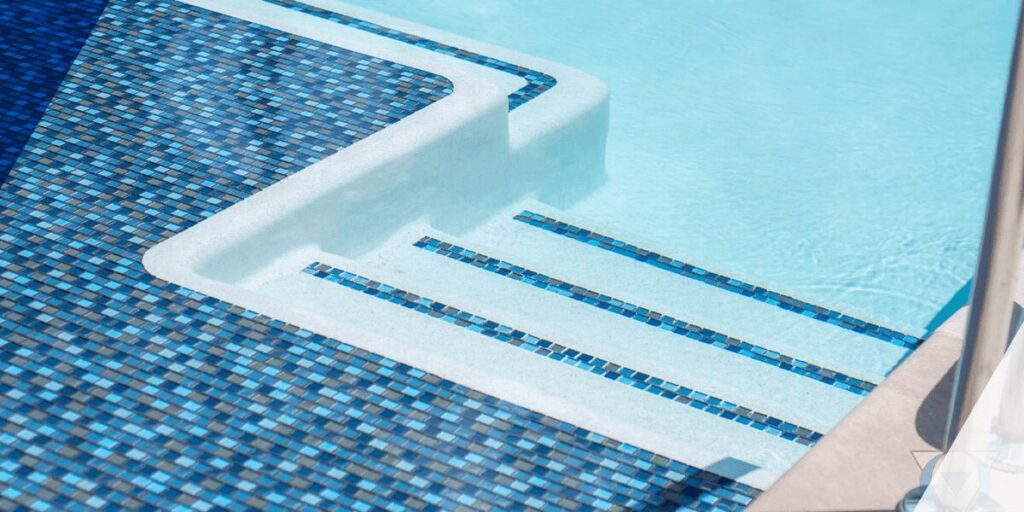
Do you want to enhance your pool’s longevity and appearance? When was the last time you resurfaced your swimming pool? If your pool surface is cracking, fading or losing its shine, it’s time for a new pool finish.
Resurfacing can improve your pool’s value, look and durability. Before you can reap the benefits of a newly finished pool, you must select the right resurfacing materials. To help you get started, we’ve compiled a list of common resurfacing tips and materials.
Points to Think About Before Resurfacing Your Pool
As you look into the options for pool resurfacing materials, keep the following considerations in mind:
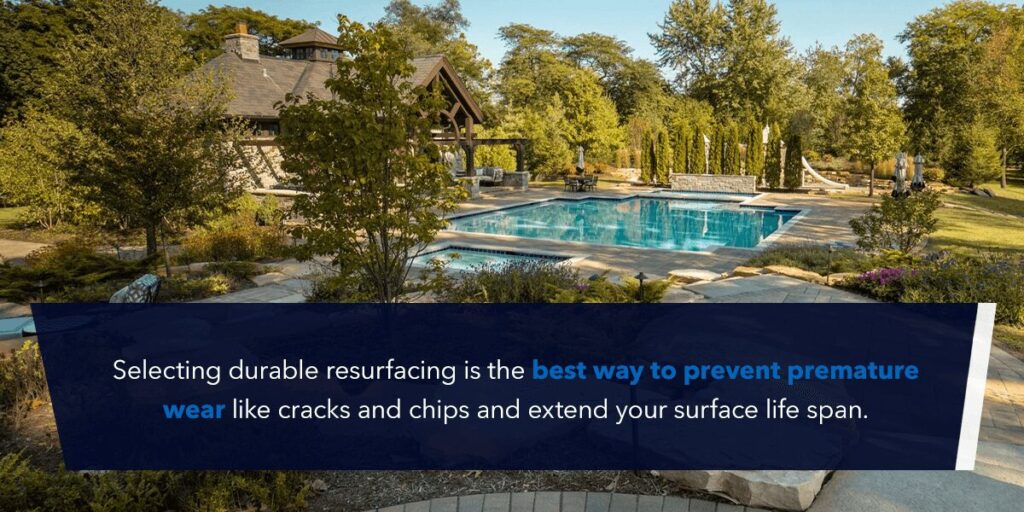
Consider durability: Chemicals and elements can deteriorate your pool surface over time. Selecting durable resurfacing is the best way to prevent premature wear like cracks and chips and extend your surface life span.
Know your climate: The sun can discolor resurfacing and impact your pool’s appearance. If you live in a warmer region or your pool gets plenty of sun, choosing a lighter finish can be the best option to protect your surface color.
Consider your budget: Resurfacing materials can be more expensive than others and the finishing you choose can impact overall resurfacing costs.
Think maintenance: Some resurfacing can require more care and cleaning than others, and knowing different maintenance requirements is essential for selecting a material suitable to your lifestyle and availability.
Decide on appearance: Different pool finishes offer an array of designs, and you’ll need to choose the option you prefer according to your preferences.
Assess safety: Surfaces prone to cracks and chips can be a safety hazard. Consider a more wear-resistant finish to enhance pool safety if you have kids or use your pool frequently.
Types of Pool Resurfacing
To select a suitable resurfacing material, you should understand common pool materials and finishes and their pros and cons.
Pebble
Pebble tec pool resurfacing is an advanced finish combining pebbles, stones and aggregate. It is refined to provide a smooth and textured feel and is popular for its aesthetics, durability, stain and chemical resistance.
Some pros of a pebble surface include:
Variety: Pebble resurfacing comes in various types. These surface types offer varying textures, designs and colors suitable for multiple goals and design preferences.
Maintenance: Pebble finishes can be low maintenance and an excellent choice for a pool requiring minimal cleaning and brushing.
Appearance: If you want to leave a lasting impression, then pebble is an ideal choice. It comes in numerous colors and designs and can offer a sleek, natural and luminous finish.
Durability: Compared to other surface types, pebble resurfacing is long-lasting and can withstand wear from pool chemicals and sun exposure.
Kid-friendliness: Smaller aggregate pebble pools can be less slippery and give kids more traction. These surface types can also be more gentle on the skin.
A potential downside of pebble surfacing is the texture. Because of the combination of pebble and stone, some of these surfaces can be bumpier than others, which pool-goers may not enjoy on their feet.
Plaster
Plaster is one of the most common pool surfaces, made with sand and cement. It is popular for its smooth texture and low cost.
Some top advantages of a plaster surface are:
Textures: Plaster offers a smooth texture that can be gentle on the feet and skin.
Appearance: Plaster is an excellent choice if you want a natural-looking and enticing pool. It comes in many colors, pigments and tints, helping achieve a unique and appealing pool design.
Cost: Plaster can be an inexpensive material and budget-friendly choice.
Slip-resistant: Plaster offers a polished texture but can be slip-resistant underwater, making it ideal for kids.
Drawbacks of a plaster surface include:
Less durable: Plaster surfaces are porous, making them more susceptible to stains. They can also discolor quickly in the sun compared to pebbles and other surfaces.
Maintenance: Because plaster is more vulnerable to wear, you’ll need to spend more time caring for and upkeeping your pool to preserve the surface’s life span.
Installation: Achieving the right consistency when mixing and installing plaster can be complex, requiring more time and skill.
Quartz
Quartz is a long-lasting pool resurfacing made with quartz aggregate and white cement. It is one of the most durable and low-maintenance pool finishes.
The advantages of a quartz pool surface are:
Texture: Quartz surfaces are sleek and smooth, making them a popular choice for swimmers.
Aesthetics: If you want to enhance your pool design, quartz is a fantastic option. The mix of quartz, cement and various color options offers a distinct and elegant effect. Quartz is also finished with a ceramic layer, providing a polished and sleek appearance.
Wear-resistant: Quartz can be a durable material, withstanding stains and cracks.
Low-maintenance: Quartz does not wear quickly, unlike plaster, requiring little upkeep.
A couple of cons of quartz resurfacing material are:
Safety: Because of its sleek and soft texture, a quartz surface can be more slippery when wet.
Cost: While quartz surfacing can be an excellent long-term investment, it can be more costly upfront.
Pebble Tec Pool Finish vs. Plaster and Quartz Pool Finish
Understanding the differences between pebble, plaster and quartz resurfacing can help you make a suitable decision.
Pebble Surface
Here are some features of a pebble surface:
Durability
Numerous surface types
Sleek finish
Increased traction and slip resistance
Little upkeep
More rigid texture
Plaster Surface
Elements of a plaster pool surface include:
Smooth texture
Vast color palette
Enticing appearance
More prone to wear
Higher mainatencae
Inexpensive
Quartz Surface
Characteristics of a quartz surface include:
Sleek texture
Elegant appearance
Stain and crack resistance
Higher initial cost
Slippery when wet
Low maintenance
FAQs About Pool Resurfacing
Here are answers to some frequently asked questions:
How often should you resurface your pool? Your pool can require resurfacing every three to 15 years, depending on your surface material.
Is it worth resurfacing a pool? A new surface can extend the life span of your pool and improve the overall appearance, making it a worthwhile investment.
What’s the best type of pool resurfacing? The best type of pool resurfacing depends on your budget, needs, climate and design goals.
How soon can you swim in a pool after resurfacing? You can swim in a newly refinished pool after your pool water is balanced.
Choose Lotus Pools for Pool Design and Maintenance
At Lotus Pools, we understand the importance of reliable and expert pool services to add value to your home and extend your pool’s life span. No matter if you’re interested in completely renovating your existing pool or simply maintaining your pool, our team is here to help. Contact us to learn more today about how we can serve you in the Chicagoland area.